
Useful agents. Clear boundaries.
Define a browser agent’s authority, action gates, and stop conditions before allowing it into a research workflow.
Ten in-depth guides for curious minds: practical research workflows, clear technical comparisons, and careful reading of neural science.
Pick a question and take a closer look. Each article connects a specific task to supporting evidence, useful review questions, and related topics across NeuroBrowser.com. The collection is for learning and planning, not a live software or clinical service.
Browse the collection, newest publication date first.
Define a browser agent’s authority, action gates, and stop conditions before allowing it into a research workflow.
Review extension access, page context, remote processing, updates, and removal using a contained, non-sensitive test.
Understand BCI research through its measurement, decoding, feedback, and user-control loop—not a promise of mind reading.
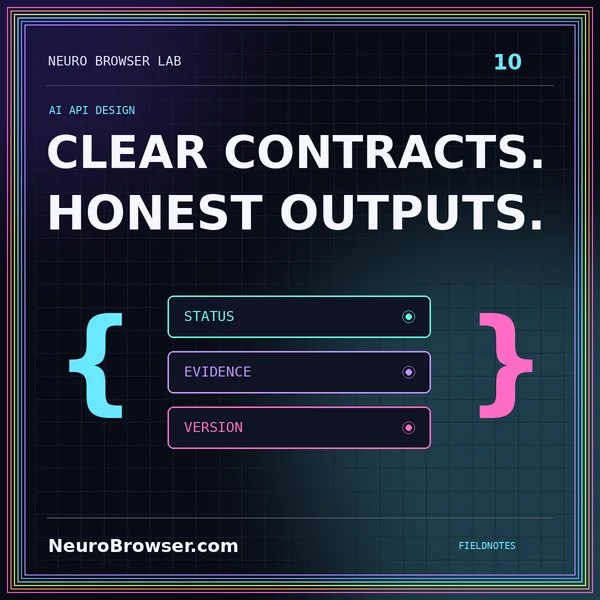
Specify evidence, uncertainty, validation, errors, and versioning in an interface contract that can be reviewed on paper.
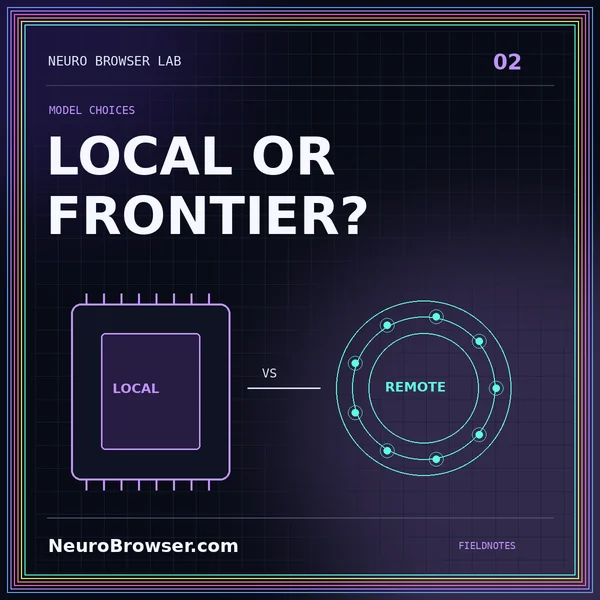
A task-based framework for comparing model quality, device constraints, data boundaries, and review effort.
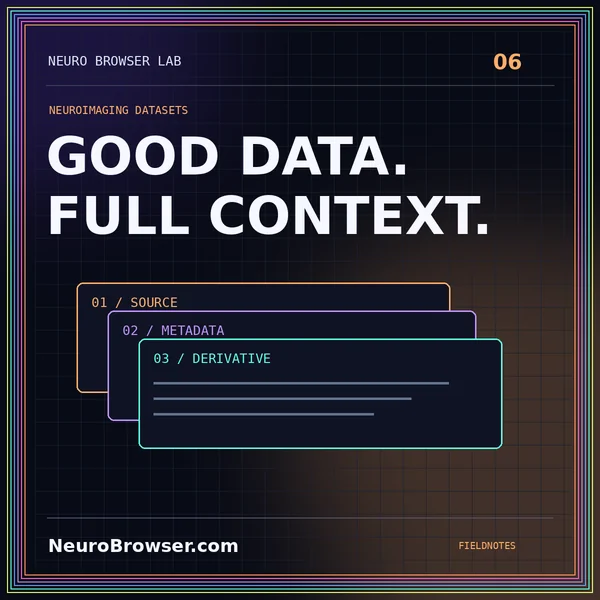
Use a structured review process to understand acquisition details, participant boundaries, derivatives, and dataset handoffs.
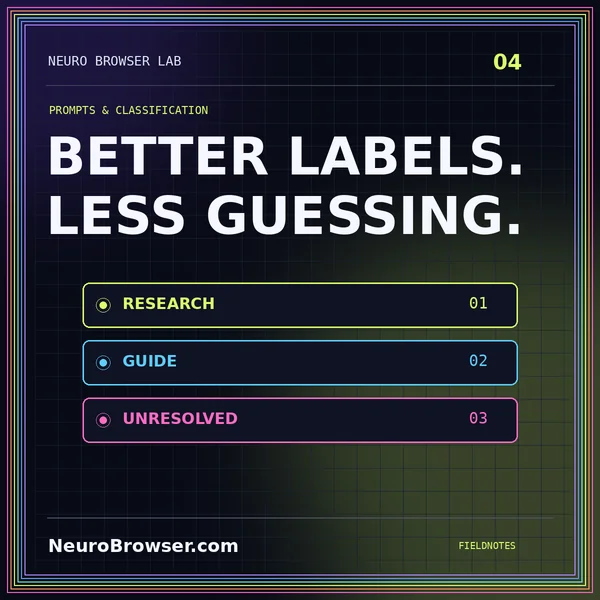
Build a label handbook, preserve supporting evidence, and route ambiguous outputs to a reviewable decision process.
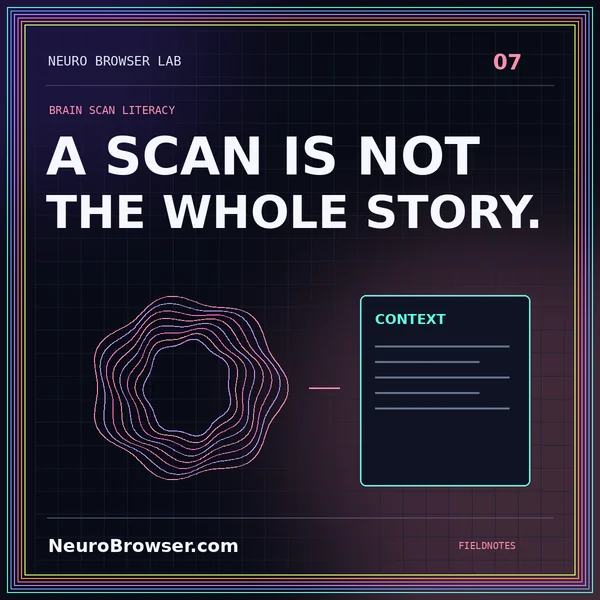
A non-diagnostic guide to reading brain-imaging information, preserving uncertainty, and preparing questions for clinicians.
Plan the collection, transformations, evaluation groups, and review process behind a meaningful visual classification.
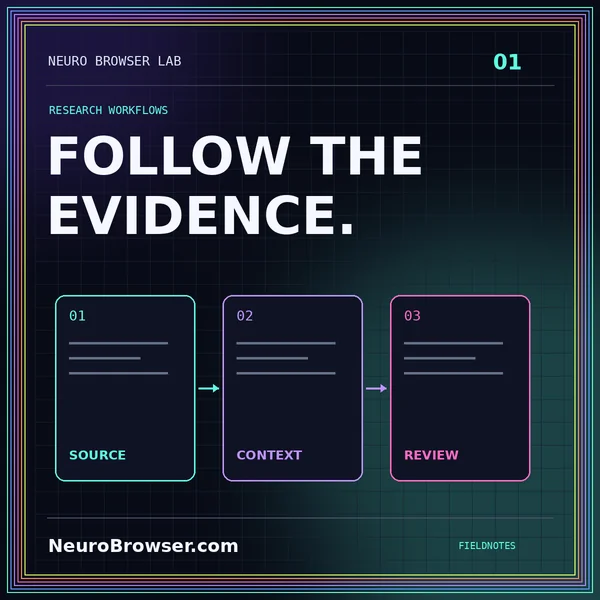
Turn scattered tabs and AI summaries into a reading process another person can inspect, question, and continue.
Use these connected reading paths to explore source literacy, evaluation, data quality, and the decisions around a research workflow.