
Signals, systems, and the person in control.
Understand BCI research through its measurement, decoding, feedback, and user-control loop—not a promise of mind reading.
Keep claims attached to their context.
Follow this reading path to distinguish a source’s observation from a later interpretation. Start with evidence records, then apply the same habit to brain-imaging and BCI reporting. Each article offers a different setting for asking who produced a claim, what supports it, and what remains uncertain.
Begin with “Brain–computer interfaces: read the loop, not the headline” for a focused method you can apply to a small reading or planning exercise. Keep the original reference open beside the article, note which recommendations fit your task, and preserve any unresolved questions for review. Follow the related topic guides to change perspective without losing the source context.
Understand BCI research through its measurement, decoding, feedback, and user-control loop—not a promise of mind reading.
A non-diagnostic guide to reading brain-imaging information, preserving uncertainty, and preparing questions for clinicians.
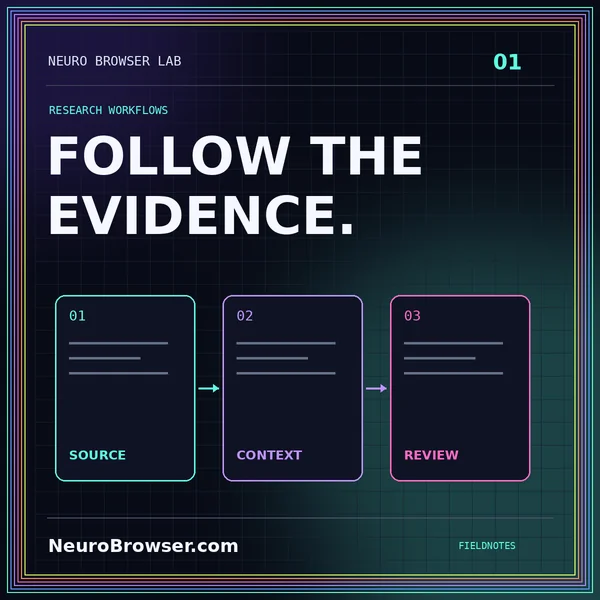
Turn scattered tabs and AI summaries into a reading process another person can inspect, question, and continue.
Keep the larger question in view. These complete guides connect the reading path to definitions, limitations, and practical review questions.
Use these connected reading paths to explore source literacy, evaluation, data quality, and the decisions around a research workflow.